The Connector was launched at the start of 2025 as a way to bring our industry closer together and to share the stories that define workforce development. Each month, it has become a place where members, partners, stakeholders, and practitioners across the country come together to exchange ideas, highlight innovation, and show what happens when collaboration drives progress. Through our newsletter, we have lifted up the people and programs shaping the future of our field and shown the world what an effective public workforce system looks like when it works the way it is meant to.
Thank you to our readers and advertisers whose support has helped the MUS Connector grow throughout its first year.
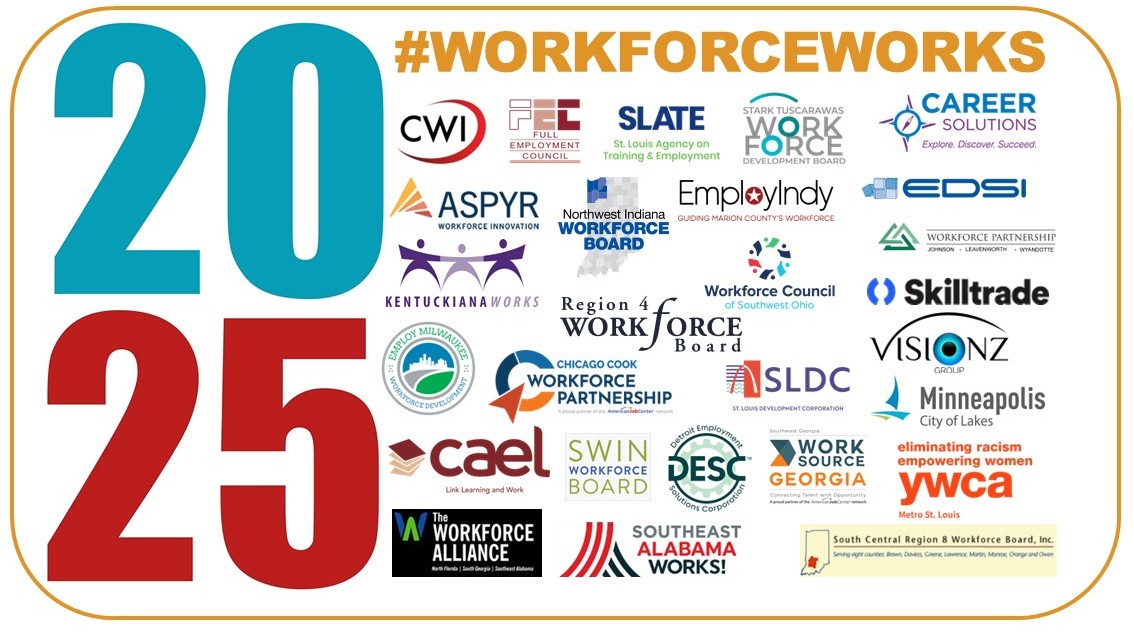
This year also marked meaningful growth for our network. We welcomed fifteen new members and extended membership to include affiliate organizations who share our values and vision for the public workforce system. They are: The Workforce Partnership, The Workforce Alliance, KentuckianaWorks, Employ Milwaukee, Visions Group, Tecumseh Area Partnership/Region 4 Workforce Board, Southwest Indiana Workforce Board, South Central Region 8 Workforce Board, Inc., Career Solutions, Cael (Council for Adult and Experiential Learning), YWCA Metro St. Louis, Skilltrade, and EDSI (Educational Data Systems, Inc.).
Each member brings unique expertise, regional insight, and a deep commitment to collaboration. Together, our members form a consortium that continues to expand opportunity, drive innovation, and build stronger, more connected communities across the country.
Movement, alignment, and momentum shaped our work throughout 2025. Across the network, our members turned national strategy into local action, translating policy into practice through programs that rebuild trust, expand access, and create lasting opportunity. Guided by the pillars of America’s Talent Strategy, we focused on making those principles real in our communities by connecting systems, strengthening collaboration, and demonstrating how workforce development works when it centers around people.
Each week, our members come together for an online discussion, titled, ”Advancing Workforce Development,” an ongoing advocacy series that has become a standing space for policy updates from the Hill, discussion of WIOA developments, and clarity on the issues shaping our field. These conversations help keep our network aligned, informed, and connected to the national policy landscape. Through these weekly conversations, we began to see a shared opportunity to strengthen how our network shows up in policy discussions. Our members chose to engage more intentionally, which included a visit to Washington D.C. in June to meet with congressional offices and share the realities of our work. These steps helped shape the WorkforceWorks!! PR campaign and our new Communications Subcommittee, which now support a more coordinated voice across our network. The subcommittee meets regularly and plays a lead role in coordinating our unified voice, especially during Workforce Development Month, when our network carries out a robust, shared public relations effort.
Our WorkforceWorks!! PR campaign is what coordinates our communications and advocacy. This campaign is designed to elevate the role and impact of Workforce Development Boards in building strong and responsive workforce systems. Born from the findings of America’s Talent Strategy, WorkforceWorks!! aligns member messaging to highlight how local partnerships, employer engagement, and coordinated resources drive real results for workers and businesses. The campaign reinforces the value of the public workforce system by connecting policy to practice and showing how Workforce Development Boards deliver measurable outcomes that strengthen communities and regional economies.
Continuing in this effort, MUS will launch a members-exclusive Quarterly Briefing Series in the new year to create a direct space for dialogue between our members and elected officials. These briefings are designed to give policymakers clear insight into field-level realities, highlight effective workforce strategies, and strengthen understanding of the challenges and opportunities shaping our regions. Our first session, Apprenticeship Works, will demonstrate the impact and potential of Registered Apprenticeship as a workforce solution.
This was also a year of measurable progress on the ground. Through the Pathway Home 6 Grant (PH6), MUS is building a coordinated reentry model across Indiana, Missouri, and Ohio that begins pre-release and connects individuals to career pathways through supportive services and skills training opportunities. Using a Managed Reentry Network approach, PH6 aligns corrections, workforce, and community partners so each participant receives consistent case management, individualized planning, and access to training that leads to real job opportunities.
We are also expanding our reach through the Growth Opportunities 5 Grant (GO5), a youth reengagement initiative serving justice and violence impacted young adults across Detroit, Northwest Indiana, and Indianapolis. This effort provides paid work experience, leadership development, and access to pre-apprenticeships and Registered Apprenticeships, helping young people reconnect to purpose while preparing for meaningful, stable careers. Through case management, mentorship, violence-prevention partners, and industry-focused training, GO5 gives participants the support and skills they need to move from disconnection to employment.
In April and May, the Workforce Wellbeing: Under Construction learning series laid the foundation for a new approach to organizational growth at MUS. What began as a pilot within our own team is evolving into a framework that supports the people behind workforce programs. By helping organizations build cultures of reflection, connection, and resilience, we believe that being intentional about how we work together is essential to becoming a thriving organization that delivers stronger outcomes for the communities they serve. There is much more to come from this work in the year ahead, and we look forward to sharing that journey with you.
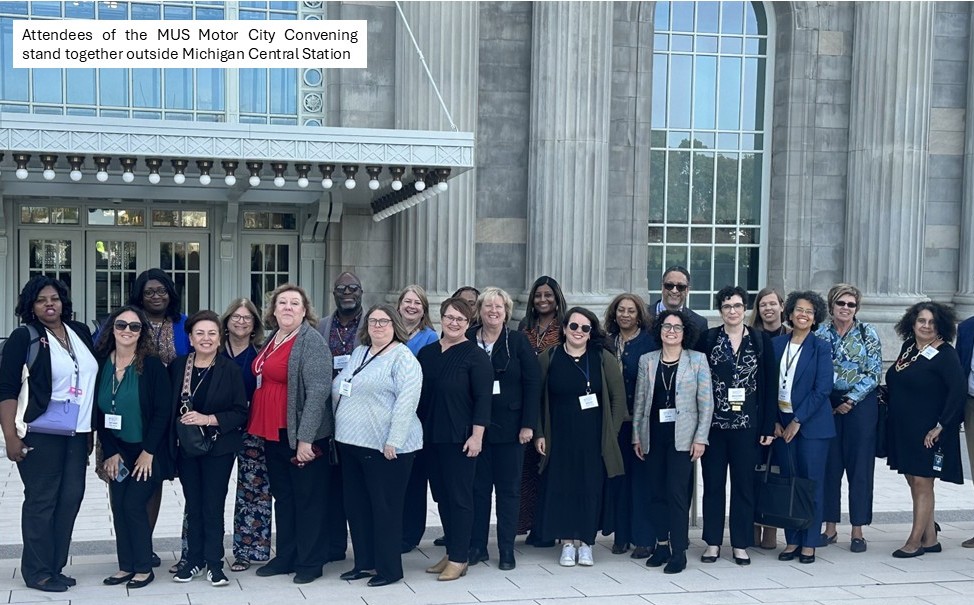
In June, MUS hosted the Milwaukee Forward: Cream City Rising Convening in partnership with Employ Milwaukee. Over three days, Workforce Development Stakeholders came together for immersive learning and a deeper look at the systems shaping opportunity in the region. Participants traveled across the city on a guided bus tour, visiting ThriveOn King and learning about JobsWork MKE’s programming, touring water sector facilities to explore high-demand occupations, and experiencing the local culture together over shared meals.
While there, we also celebrated local leadership through our Workforce Hero Awards ceremony. MUS 2025 Workforce Heros are: Pete Coffaro, Director of Public Engagement at the Milwaukee Metropolitan Sewerage District; Carla Cross, President and CEO of Cross Management Services and Board Chair of Employ Milwaukee; and MUS Board Liaison and Corporate Advisor, William Clay and Earl Buford, President of CAEL. These recognitions highlighted the commitment, service, and leadership that anchor Milwaukee’s workforce ecosystem. The time we spent together created room for thoughtful conversations about reentry, youth development, early childhood apprenticeships, sector strategies, and the future of work. What we saw throughout the event underscored Milwaukee’s innovation, elevated its leadership, and demonstrated the impact of cross-sector collaboration in strengthening workforce systems.
When federal funding for the Early Childhood Workforce Connector program ended early in 2025, MUS stayed the course. We continued serving as an independent intermediary to support our partners and keep apprenticeship pathways strong and connected. In October, MUS partnered with the Early Childhood Workforce Connector and MUS member YWCA Metro St. Louis, who hosted the Early Childhood Education Apprenticeship Accelerator. . The event brought together leaders from workforce, education, and early care to learn from Missouri’s Registered Apprenticeship model and explore opportunities for alignment. Building from this foundation, MUS is shaping the SEED fund (Supporting Early Educators Development) and exploring new sponsorship models to support continued growth and alignment in the early childhood education and care industry.
Throughout the year, MUS contributed to national and regional conferences and events such as: Apprenticeships for America’s – AFA 2025 Summit, NAWB Forum, Talent Development Conference 2025 (TDCON), 4th Annual ECEPTS Conference on ECE Apprenticeship, among others. These contributions and conversations strengthened our partnerships and deepened our role as a connector between policy, practice, and regional innovation.
2025 marks the year that MUS began laying groundwork with regional collaborators in the semiconductor and microelectronics ecosystem, contributing to early design conversations around emerging talent pathways and future workforce needs. These efforts reinforce MUS’s commitment to aligning strategies with evolving industries.
This year also allowed us to grow our sponsorship partnerships, and we are grateful for the organizations that chose to invest in our work. Thank you to our 2025 MUS sponsors: Foundation for Talent Transformation, CAEL, Lightcast, NAWB, QuickStart Academy, Skilltrade, The Associated General Contractors of Greater Milwaukee, Teachstone and District 1199C Training Fund for your commitment to supporting a stronger and more connected workforce system.
As we look toward 2026, we are grounded by the lessons and partnerships that have strengthened our work this year. I am grateful to our readers, advertisers, members, partners, supporters, and sponsors for the dedication and creativity you bring to this community. I also invite you to be part of the MUS Connector by sharing your stories and insights with us. Your voices help us show the impact of workforce development and the people behind it.